
Support for fathersGet urgent help

Home / A path through fatherhood

Find a path that fits

A path through fatherhood

Whether you are preparing for birth, worried about yourself, carrying tension at home or looking for other dads, begin with the part you can name.

Choose one starting point ↓
An expectant father asks a question during a relaxed conversation with his pregnant partner and a facilitator.

Choose one starting point

These paths can overlap. You can take one step, leave, and come back. No answers are collected here.

01

Before the baby arrives

I want to know what could change

Ask about your own wellbeing, sleep, work, support and what to do if either parent struggles. You belong in the conversation before there is a crisis.

One step: Bring three questions to your next appointment. Ask who can help you directly if you need it.

A smaller step: Write down one question you want to ask, in your own words.
02

My own wellbeing

I am not feeling like myself

Distress can look like exhaustion, irritability, withdrawal or loss of pleasure. You do not need to prove that you are struggling more than anyone else.

One step: Tell one trusted person what has changed. If daily life is affected, arrange an appointment for yourself.

A smaller step: Note one thing that has changed for you, in a sentence or two.
03

The relationship at home

Our conversations keep going wrong

Pregnancy and the time after birth can change how both people feel and respond. You cannot diagnose a partner from conflict. If you feel frightened, controlled or at risk, safety comes first.

One step: Name one concrete event, how it affected you and what you need. Choose a safe time to talk, or seek support on your own.

A smaller step: Keep one sentence in mind about what you need; write it only if safe.
04

Babies and preschoolers

I want to stay close to my child

A difficult period does not erase your place in your child’s life. Familiar care, a short game, a story and responding to a child’s cues are ways to connect.

One step: Choose one repeatable moment this week. If contact is limited, plan within the arrangements that apply to you.

A smaller step: Think of one moment your child enjoys; you do not need to plan it today.
05

A family changing shape

We may be separating or living apart

Loss, conflict and practical arrangements can sit together. Keep a child out of adult blame, and get suitable local advice about arrangements rather than relying on a general website.

One step: Write down one child-focused routine and one source of personal support.

A smaller step: Write down one routine you can keep steady for your child.
06

Other fathers and community

I need people who understand

Company need not start with a disclosure. A child-welcoming meet-up, a walk, a seated group or a call may fit different bodies, schedules and family circumstances.

One step: Check an organiser’s current time, cost, access, child policy and language. Ask if you can start by listening.

A smaller step: Read one group's public page and note what it offers first.

If even a small step feels like too much today, it is okay to pause and come back later; if someone is not safe, urgent help comes first.

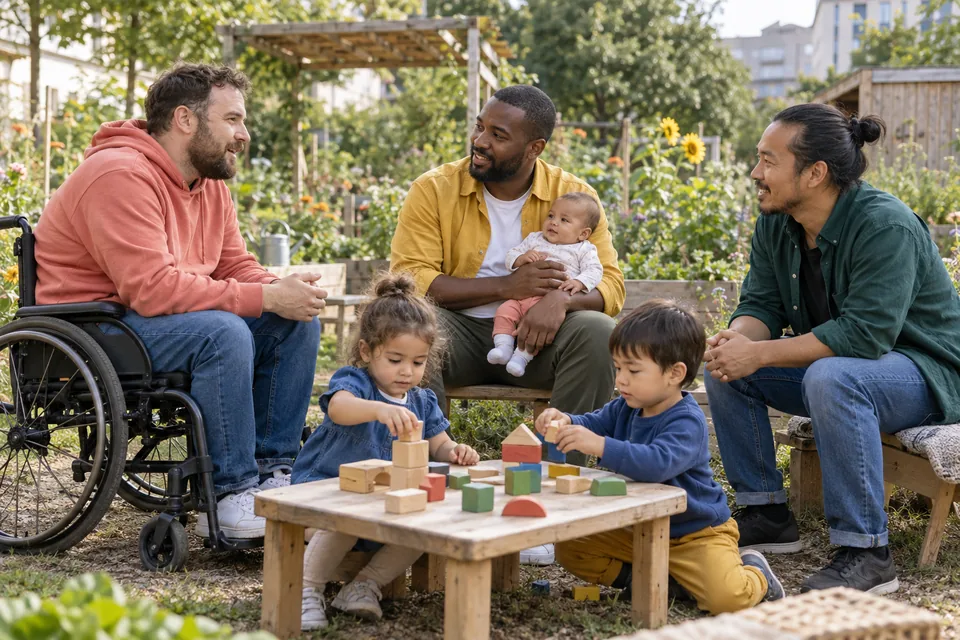
Three fathers of different backgrounds talk in a garden while two preschoolers play and one father holds an awake baby.

Connection

What a dads club could offer

A local club can make friendship easier to begin: show up with a baby or preschooler, share an ordinary activity, and talk when you want to. UK examples combine child-friendly drop-ins, walks, one-to-one help and links to other services. This website does not currently run a club. An actual programme would need local hosts, clear safeguarding, accessibility, privacy and routes to professional support.

See real community examples →

Why we built these paths

A 2026 qualitative synthesis describes fathers with postnatal depression feeling disconnected from partners or children, withdrawing and carrying care without emotional connection. NHS England guidance asks services to recognise partners’ own changing mental-health needs. These sources inform the questions here; they do not prove a diagnosis or a treatment effect.

Raphael et al. (2026) · NHS England

Read the September evidence update →

Need a person or urgent help?

A guide is a starting point. If you need another person, use our independently run service directory. If someone is in immediate danger, use local emergency help.