Updated September 2026
In this guide
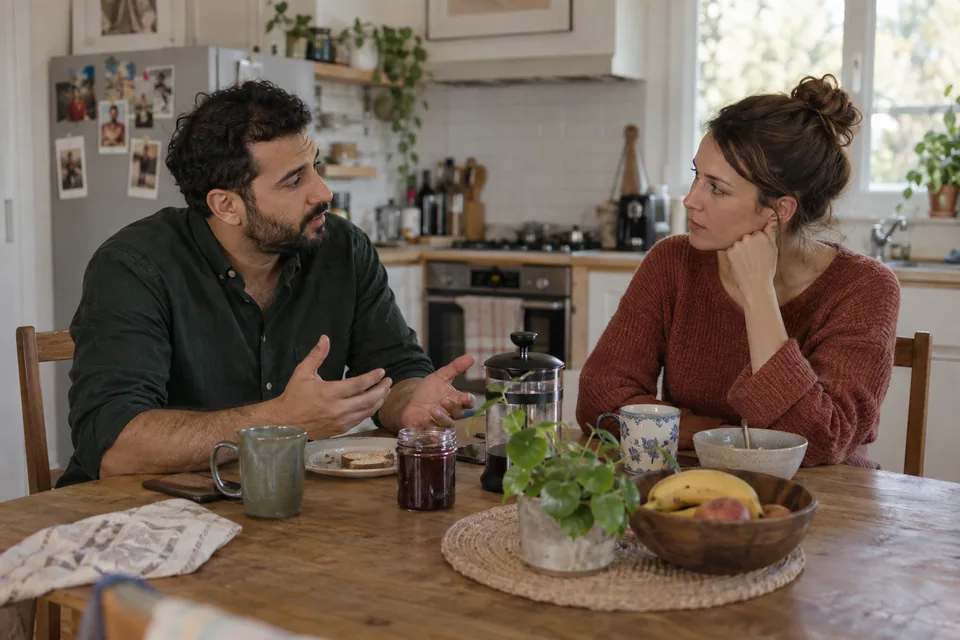
Separate observation from explanation
Describe what you have noticed and how it affects daily life. Withdrawal, anger or disagreement cannot by themselves establish a diagnosis. Not recognising distress, being afraid to disclose it, disagreeing about treatment and minimising harmful behaviour are different possibilities.

A careful conversation at home
Name one observed change without assigning a diagnosis.
When she says nothing is wrong
A conversation can begin with concern rather than a label: ‘I’m worried about how things have changed, and I would like some help.’ You cannot make another adult agree with your explanation. You can seek your own support and ask a professional for general guidance. Do not use a checklist from this website to diagnose your partner.

Space to listen, when it is safe
A gentle conversation can begin with one thing you have noticed and one thing you need. If you feel unsafe, use the safety guidance instead.
Do not carry every role
Being a partner, parent, worker and sole source of support can become too much. Identify practical tasks other people or services might share. Professionals may have limits on what they can disclose about another person, but that does not stop you asking about support for yourself.
When a conversation is not safe
Threats, intimidation, control or violence need their own support route. You do not have to explain them as illness before seeking help. Joint exercises are not the right starting point when you are frightened of participating. Use the specialist support or urgent-help page as appropriate.
One step you could take
- Name one observed change without assigning a diagnosis.
- Consider how it affects you and your child.
- Choose a next step that does not require your partner’s agreement.
Sources
Research reviewed to 1 September 2026.